Measles Outbreak in Singapore: Global Health Community on High Alert as Cases Skyrocket by 550%
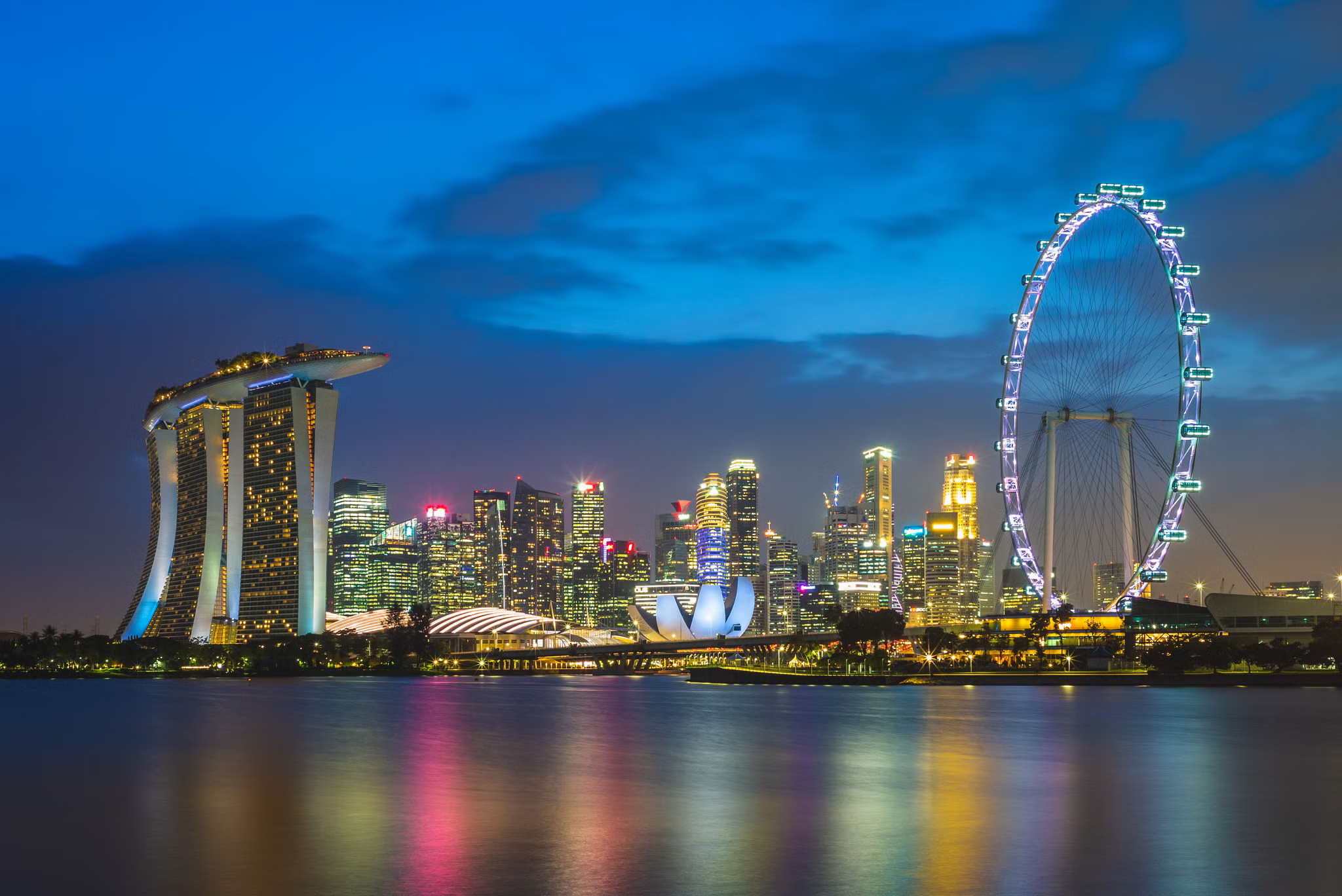
Singapore Sees 550% Surge in Measles Cases Amid Global Health Warnings
The number of measles cases in Singapore has skyrocketed by 550% in just one year, with 11 new cases reported in January 2026. This disturbing trend is mirroring global health warnings as the World Health Organization convenes an emergency meeting to discuss a surge in measles outbreaks across the world.
The measles epidemic sweeping through Singapore is not an isolated incident, but rather a symptom of a broader global struggle between developed nations and developing countries over vaccine accessibility and cooperation. As the COVID-19 pandemic continues to reshape global health dynamics, concerns are growing about the resurgence of infectious diseases that were once considered eradicated.
The WHO has issued warnings that low vaccination rates in certain parts of the world are fueling a measles resurgence that is now spreading across international borders. Singapore, with its reputation as one of the most efficient and effective public health systems globally, finds itself at the epicenter of this growing crisis. With mandatory isolation and video call checks recently introduced to curb the spread of measles, officials are racing against time to prevent a potentially catastrophic outbreak in one of the world's most densely populated cities.
The recent surge in measles cases in Singapore is deeply concerning, particularly given the country's stringent public health measures. The government has taken swift action to contain the outbreak and remind the public of the importance of vaccination. Mandatory isolation and video call checks have been introduced as part of the enhanced public health measures, a proactive approach that contrasts with the laissez-faire attitude towards vaccination seen in some developing countries.
The global spread of infectious diseases is further exacerbated by the ease of international travel and globalization. The WHO has highlighted the need for increased cooperation and support to strengthen vaccination programs in low- and middle-income countries. The recent surge in mpox cases in Zambia, Sierra Leone, Tanzania, and Trinidad and Tobago, which have been linked to international travel and trade, underscores this concern.
The response to the outbreak in Singapore highlights the importance of public-private partnerships in strengthening public health systems. The government's efforts to enhance its vaccination program and improve access to vaccines are a testament to its commitment to eradicating infectious diseases. To prevent future outbreaks and strengthen global preparedness, it is essential to address the root causes of low vaccination rates and vaccine accessibility challenges.
This requires increased cooperation between developed and developing countries, investment in public health systems, and improved coordination on vaccine development and distribution. The WHO has emphasized the need for support to low- and middle-income countries to strengthen their vaccination programs. The measles outbreak in Singapore serves as a reminder of the ongoing need for global cooperation on vaccine accessibility and public health.